


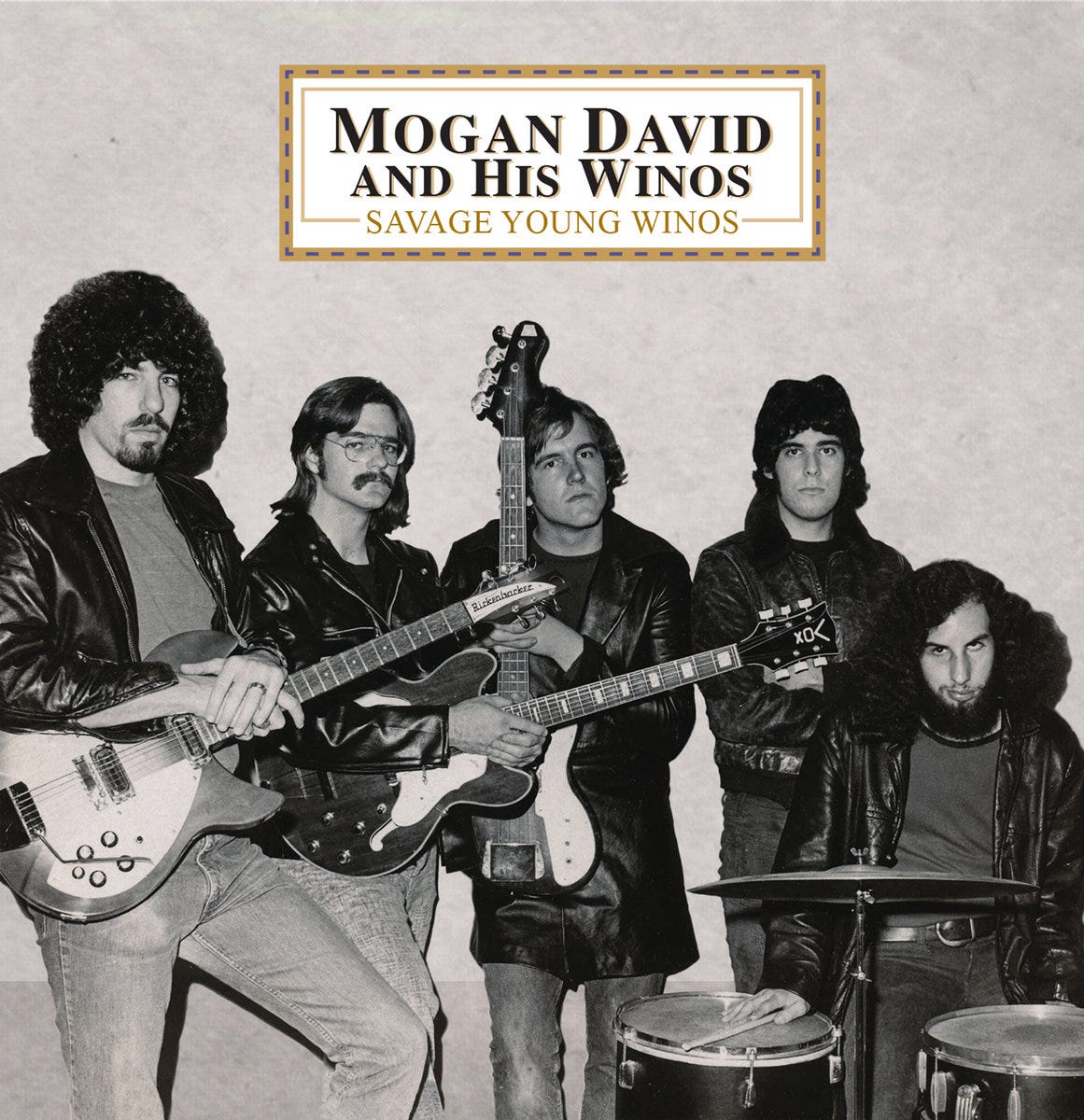
Some records don’t disappear because they lack value. Lots of the times, they vanish because they arrived at the wrong time. Originally self-released in 1973, and effectively out of circulation after a few years, Savage Young Winos has long existed as a Los Angeles rock ‘n’ roll footnote. Mogan David and His Winos, was formed by UCLA friends who loved ’60s pop and garage-rock, even as prevailing trends moved toward progressive rock and heavy metal. Their story begins with homemade recordings in living rooms and college apartments. “Nose Job,” recorded in December ‘69, started as a Mad magazine-inspired novelty and doo-wop tune. The group’s singer and main-songwriter Harold Bronson reshaped it into a charmingly sloppy, straight-ahead rocker. The single became a campus sensation, topping UCLA’s KLA radio and briefly leading sales at the campus record store, with a young Ron Mael (later of Sparks) behind the counter. CBS campus rep. and later guitarist Paul Rappaport was entranced after being handed a copy, even as some retailers deemed it “offensive.” The single made the rounds: dropped off at The Beach Boys’ Brother Records only to be rejected by Dennis Wilson, mailed to Frank Zappa with no reply, yet embraced enough to earn a spin from Dr. Demento. By ‘71, Bronson and his bandmate Mark Leviton had begun writing original material with melodic grit, leading to “Street Baby,” a surprisingly empathetic portrait of a homeless kid living on the margins, and “Party Games,” which captures shy-guy frustration with disinterested girls. “Beauty Queen,” recorded in ‘73 with the Yardbirds in mind, it tells a real-life story about a former small-town pageant winner trapped in a hollow marriage to a much older man. It’s classic Winos - socially observant, melodically direct, and edged with melancholy beneath its tough exterior. It’s one of the compilation’s best. “All The Wrong Girls Like Me,” recorded in ‘75, was conceived by Bronson as an unofficial sequel to Herman’s Hermits’ “Here Comes the Star.” Flipping the teen pop-idol narrative inward, the lonely singer surrounded by fame but searching for real connection. With organ swells and bittersweet hooks, it sounds like it should’ve been a Top 40 single. Unfortunately Peter Noone never recorded it. Among the chosen demos, “Where Do I Go From Here” stands out with its tender ache and lyrical elegance, reminiscent of Love and The Electric Prunes. The Winos were less a bid for stardom than a sharp, self-aware extension of their teenage bedroom dreams. After issuing early singles and helping launch the fledgling Rhino Records as co-founder and in-house manager, Bronson carried that same DIY spirit into later ventures with The Low Numbers in the late ‘70s - “She's Not Gonna Be In My Song” forever a classic. It all plays now as a lovingly obsessive time capsule and proof that the dream never really faded, it just found smarter ways to survive. The Winos’ original compilation LP sold barely 500 copies. Decades later, collectors were paying triple digits just to hear it. Buy the expanded reissue from Liberation Hall so collectors years later from now can do the same.